
Optimizing PV System Performance with FLC and P&O MPPT Controllers Using SEPIC and Boost Converters
DOI:
https://doi.org/10.12700/bk.2026.8.1.265Keywords:
Photovoltaic Systems (PV), Maximum Power Point Tracking (MPPT), Fuzzy Logic Controller (FLC), Perturb and Observe (P&O), SEPIC Converter, Boost Converter.Abstract
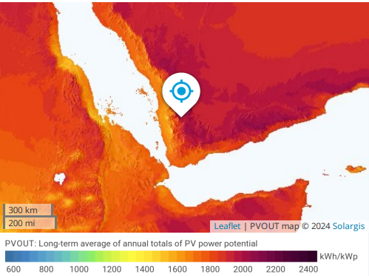
The growing reliance on renewable energy systems necessitates maximizing efficiency, reducing costs, and improving reliability. In photovoltaic (PV) systems, Maximum Power Point Tracking (MPPT) and converter design are critical to achieving these goals. This study models a PV module integrated with MPPT controllers using SEPIC and Boost converters to compare their performance under varying environmental conditions. Using MATLAB/SIMULINK, two control techniques, Fuzzy Logic Controller (FLC) and Perturb and Observe (P&O), and two converters - SEPIC and Boost -were simulated and compared. Results indicate that the SEPIC converter outperformed the Boost converter in terms of response time and ripple reduction (1.20% vs. 3.40%). As for the controllers, FLC demonstrated superior performance in tracking maximum power compared to P&O, achieving higher efficiency (92.5% vs. 91.7%) and faster response (~0.004 s), delivering better current, voltage, and power outputs. A case study focusing on Yemen (Sana'a and Aden) analysed system performance under variable solar irradiation and temperature, with efficiencies reaching 93.1% and 91.9%. These results emphasize the potential of enhancing PV system efficiency for real applications.
References
P. Ashwini Kumari, P. Geethanjali "Parameter estimation for photovoltaic system under normal and partial shading conditions" Renewable and Sustainable Energy Review, (2018).
S. S. M. Ajarostaghi and S. S. Mousavi, “Solar energy conversion technologies: Principles and advancements,” in Solar Energy Advancements in Agriculture and Food Production Systems, pp. 29–76, 2022
Ali, Ahmed Amgad Naji, et al. "Improving Switching Efficiency with a Step-Up/Step-Down Hybrid Buck-Boost Converter using fuzzy logic control." Bánki Közlemények 7.2 (2025): 20-27.
Hohm, D. P., & Ropp, M. E. (2003). Comparative study of maximum power point tracking algorithms. Progress in Photovoltaics: Research and Applications.
Ahmed, Amgad Naji Ali, and György Györök. "Evaluating Conventional and Hybrid Buck-Boost Converters using Fuzzy Logic Decision-Making." Acta Polytechnica Hungarica 22.9 (2025): 121-142.
Yi, F., & Wang, F. (2023). Review of voltage-bucking/boosting techniques, topologies, and applications. Energies, 16(2), 842.
El-Barbary, Zakaria & Cheema, Khalid & Al-Gahtani, Saad & El-Sehiemy, Ragab. (2022). High Gain Chopper Supplied from PV System to Fed Synchro- nous Reluctance Motor Drive for Pumping Water Application. Scientific Reports.
K. Y. Yap, C. R. Sarimuthu, and J. M. Y. Lim, 2020 "Artificial Intelligence based MPPT techniques for solar power system: A review," J. Mod. Power Syst. Clean Energy, vol. 8, no. 6, pp. 1043-1059.
A. M. A. Mahmoud, H. M. Mashaly, S. A. Kandil, H. E. Khashab, and M. N. F. Nashed, Nagoya, Japan, 2000 "Fuzzy logic implementation for photovoltaic maximum power tracking," in 2000 26th Annual Conference of the IEEE Industrial2000 IEEE International Conference on Industrial Electronics, Control and Instrumentation. 21st Century Technologies,.
Udumula, R. R., Hanumandla, D., & Bellapu, V. (2020). Closed loop voltage mode controlled high step-down/step-up positive output buck–boost converter. Journal of Power Technologies, 100(3), 255.
Bakeer, A., Chub, A., & Vinnikov, D. (2020). Step-up series resonant DC–DC converter with bidirectional-switch-based boost rectifier for wide input voltage range photovoltaic applications. Energies, 13(14), 3747.
Dawud Ansari & Claudia Kemfert & Hashem al-Kuhlani,. "Yemen's Solar Revolution: Developments, Challenges, Opportunities; Report with Policy Recommendations Based on Results from Research Projects Financed by the Federal Ministry of Education and Research," DIW Berlin: Politikberatung kompakt, DIW Berlin, German Institute for Economic Research, 2019.
D. T. Alkebsi and R. Albouthigy, "Environmental Condition Impacts On PV Systems In Yemen Based On Fuzzy Logic Technique: A Case Study," 2025 5th International Conference on Emerging Smart Technologies and Applications (eSmarTA), Ibb, Yemen, 2025, pp. 1-7, doi: 10.1109/eSmarTA66764.2025.11132235
Downloads
Published
How to Cite
Issue
Section
License
Copyright (c) 2026 Amgad Naji Ali Ahmed, Dheyaalhaq Alkebsi, Radhwan Albouthaigy, György Györök

This work is licensed under a Creative Commons Attribution-NonCommercial-NoDerivatives 4.0 International License.